- This topic has 1 reply, 2 voices, and was last updated 37 seconds ago by
Gear FAQs.
-
AuthorPosts
-
November 10, 2026 at 10:24 pm #7993
Campfire Ranger
ParticipantGear Forum editorial research · Campfire Ranger · November 2026
The best camping trash setup depends on where the rubbish goes after dinner. A large pop-up bin suits a busy car-camping kitchen; an open frame holds a disposable bag; a reusable sack packs down between trips. None of those features makes a container bear-resistant.
Three options for different camps
- For a large camp kitchen: Coghlan’s Pop-Up Camp Trash Can, model 1219. Check that you actually need its size before making room for it.
- For ordinary 13-gallon bags: Lippert Trash Bag Holder, model 2022105716. This is a frame for a bag, so plan somewhere secure to put the rubbish when you leave camp.
- For a reusable pack-away sack: Kelty Litter G’tter. Check stock in your preferred colour before ordering.
Our picks compare manufacturer specifications, current listings and practical tradeoffs. They are editorial recommendations, without a hands-on test claim. The follow-up below includes photos, dimensions, drawbacks and a low-cost alternative.
Start with your campsite’s storage rules
The National Park Service’s food-storage guidance includes rubbish among wildlife attractants. Follow the rules where you camp for secure storage and disposal. A zipped lid, roll-top closure or hanging loop does not establish bear resistance.
If a bin is just making cleanup easier, a bag inside a bucket or tote you already own may be enough while you are using it. Avoid buying more capacity than your campsite and disposal routine need.
What is your setup: family car camping, an RV pitch or a small tent camp? Share your group size, available storage and how often you can empty the rubbish, and readers can compare suitable options.
November 10, 2026 at 10:24 pm #7994Gear FAQs
ParticipantGear Forum editorial research · Gear FAQs · November 2026
Best camping trash bags and holders: comparison
Choose the format first. These three products organize camp rubbish in different ways, so there is no useful single winner for every trip. Specifications and manufacturer listings were checked on November 10, 2026; prices and stock can change.
Camping trash options and their main tradeoffs Option Format and size Best fit and tradeoff Coghlan’s bin 111 L pop-up bin Group kitchens; a large footprint Lippert holder Frame for 13-gallon bags Everyday bags; no enclosed storage Kelty sack 30 L roll-top sack Packs away; wash and dry after use The quoted capacities describe different things: Coghlan’s bin volume, Lippert’s supported bag size and Kelty’s sack capacity. They do not guarantee that a particular liner fits, or establish a safe carrying weight.
Coghlan’s Pop-Up Camp Trash Can 1219: for a large camp kitchen
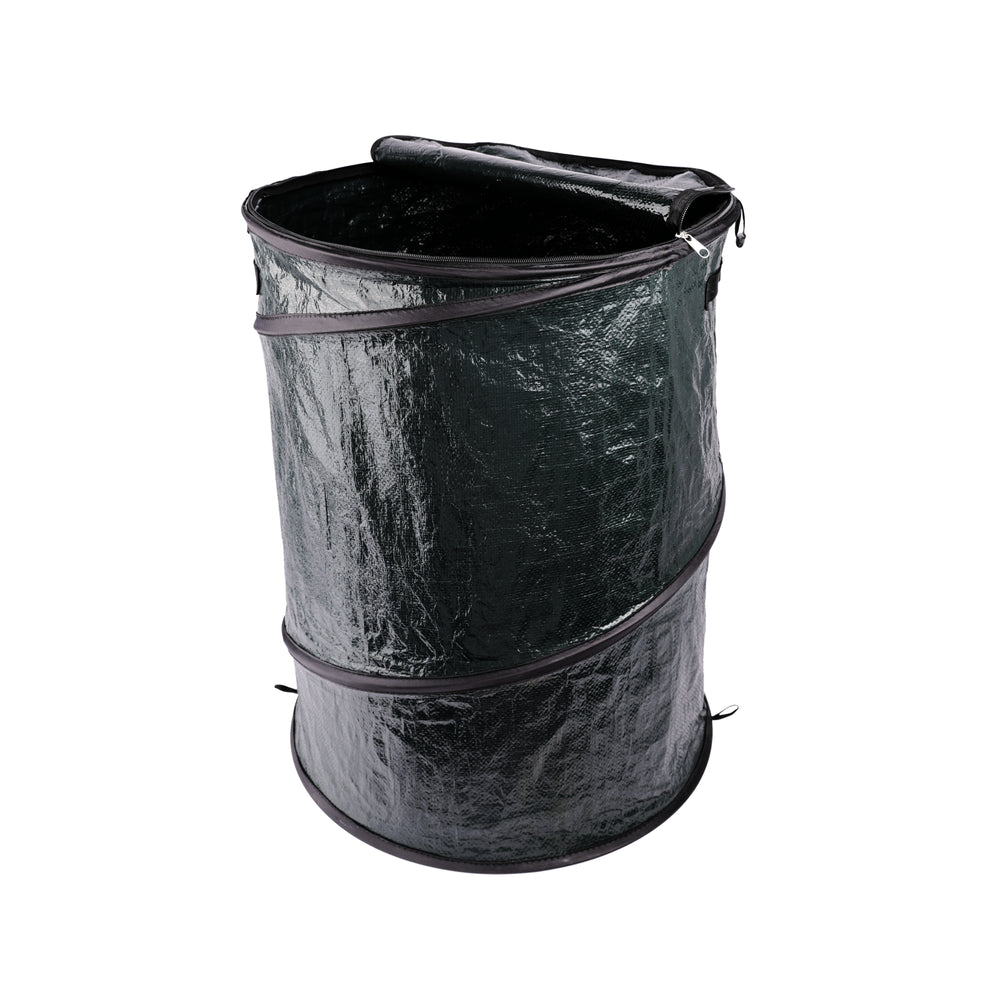
Coghlan's Pop-Up Camp Trash Can 1219. Manufacturer photograph; source and specifications. The standard 1219 measures 19 inches in diameter and 24 inches high when open.
This spring-loaded polyethylene bin has a zippered lid and carrying handles. It collapses to a stated 1.75-inch thickness and uses ties to stay folded. Coghlan’s says it accepts standard-to-large garbage bags; check the opening and liner fit rather than matching capacity alone. Manufacturer specifications.
Why choose it: The pop-up format gives a group an obvious place for rubbish, then flattens for the journey home. It is a sensible candidate when small kitchen-size arrangements are awkward during meal preparation.
Reasons to skip it: A nearly empty large bin still takes up ground space. This is the standard 1219 model; features advertised for Coghlan’s Deluxe version should not be assumed here. The fabric and zipped top are not a wildlife-storage system.
Lippert Trash Bag Holder 2022105716: for 13-gallon bags
The assembled holder measures 17.25 × 17.25 × 31 inches. Allow room for that footprint beside your camp kitchen.
Lippert specifies 13-gallon trash bags and compatibility with 24-inch drawstring bags. The plastic stand weighs 2.5 pounds, assembles from supports and two bases, and collapses for storage. Its manufacturer listing showed it in stock at the check. Manufacturer specifications and availability.
Why choose it: If you already carry compatible disposable bags, a frame can make cleanup more convenient without adding another fabric container to wash. Try a bag at home before packing the stand.
Reasons to skip it: It does not provide enclosed transport or overnight storage. A loaded bag still needs to be closed and moved to the permitted rubbish-storage location. Include the assembled footprint when planning a small pitch.
Kelty Litter G’tter: for a reusable pack-away sack
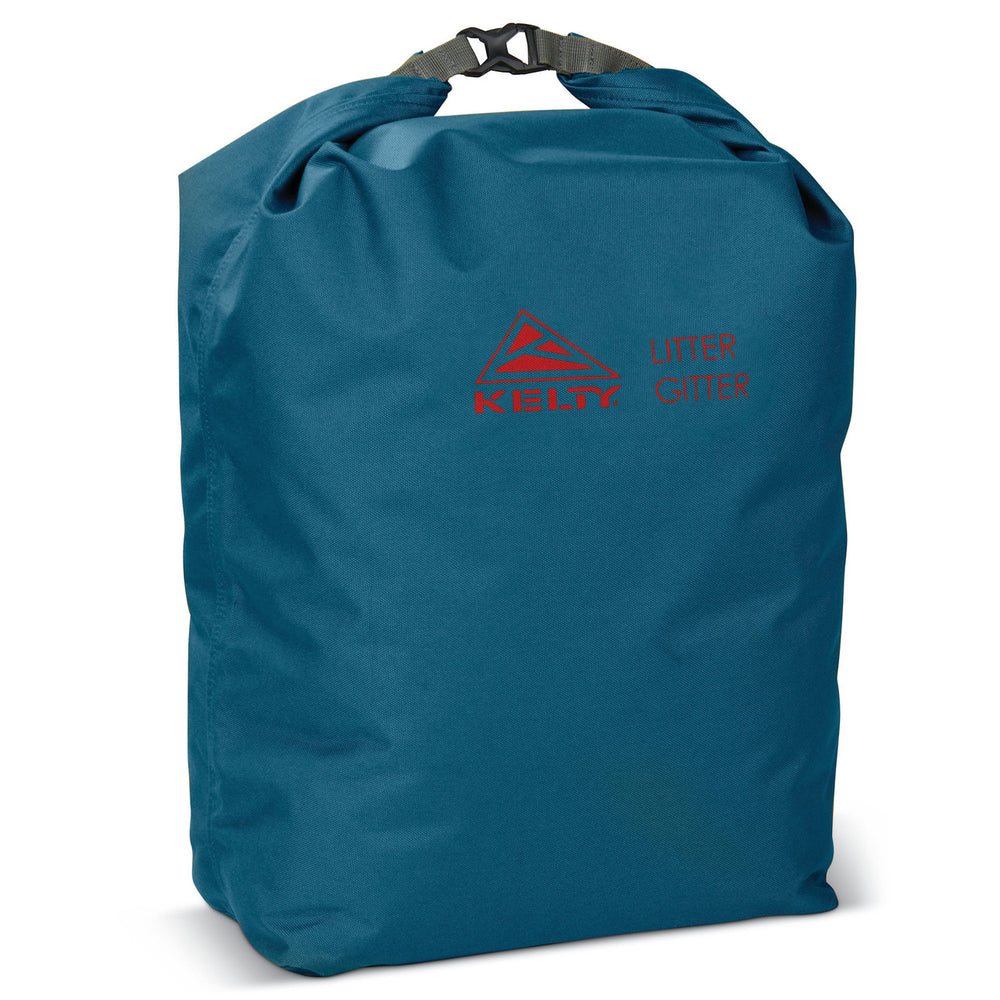
Kelty Litter Gtter. Manufacturer photograph; source and specifications. The 30 L Litter G’tter uses 600D polyester with a PU backing, taped seams, a roll-top closure and a hanging loop. Kelty describes it as spill-resistant and says to rinse it out and air-dry it. Manufacturer details.
Why choose it: A flexible sack can be easier to pack between trips than a standing bin. It is the option to consider if you want reusable containment and can keep up with cleaning and drying.
Reasons to skip it: It needs cleaning and drying after use. Check the exact model and current colour availability before ordering. Do not read “spill-resistant” as a guarantee of waterproof or odour-proof containment.
For wet or messy rubbish, consider a disposable inner liner and keep the sack upright. A hanging loop is convenient for positioning a bag while in use; it does not make a bear-safe food hang.
What to check before buying
Match the rubbish setup to the trip Check Practical decision People and meals Base capacity on the rubbish you generate between disposal stops, rather than the largest bin available. Liner fit Test the bag around the rim and down to the base. Leave room to tie it closed. Packed storage Measure the space in your vehicle. A flat round bin can still be wider than a storage compartment. End-of-day routine Know where rubbish must go before leaving camp or turning in. Cleanup Allow space to rinse and fully dry a reusable container before putting it away. The low-cost alternative
For occasional trips, start with bags inside an existing bucket or washable tote while you are cooking and cleaning. Empty the setup frequently. This may answer the practical problem without buying specialist camping equipment; secure-storage rules still apply.
Keep sharp waste from puncturing a liner, and keep hot ashes away from plastic or fabric containers. A separate recycling bag can help where the campsite has a suitable collection point. Neither requires an oversized rubbish station.
Why the old Thetford suggestion was removed
Thetford’s SmartTote belongs to the RV waste-tank category. Its official parts documentation identifies a tank system, so it is not a comparable camp rubbish bin. Lippert fills the bag-holder role in this shortlist; it is not presented as a SmartTote successor.
Pack it out and store it properly
Leave No Trace advises packing out rubbish and food scraps rather than burning them. Check the local food and rubbish storage requirements before choosing a container. None of these recommendations establishes approval for bear-resistant storage.
Check current listings
As an Amazon Associate we earn from qualifying purchases. These links open searches; compare the exact model, seller, price and availability before buying.
- Search for Coghlan’s Pop-Up Camp Trash Can 1219
- Search for Lippert Trash Bag Holder 2022105716
- Check for Kelty Litter G’tter listings
If you use one of these, describe the bag fit, packing space and cleanup involved. Those details are more useful to another camper than a general star rating.
-
AuthorPosts
- You must be logged in to reply to this topic.